
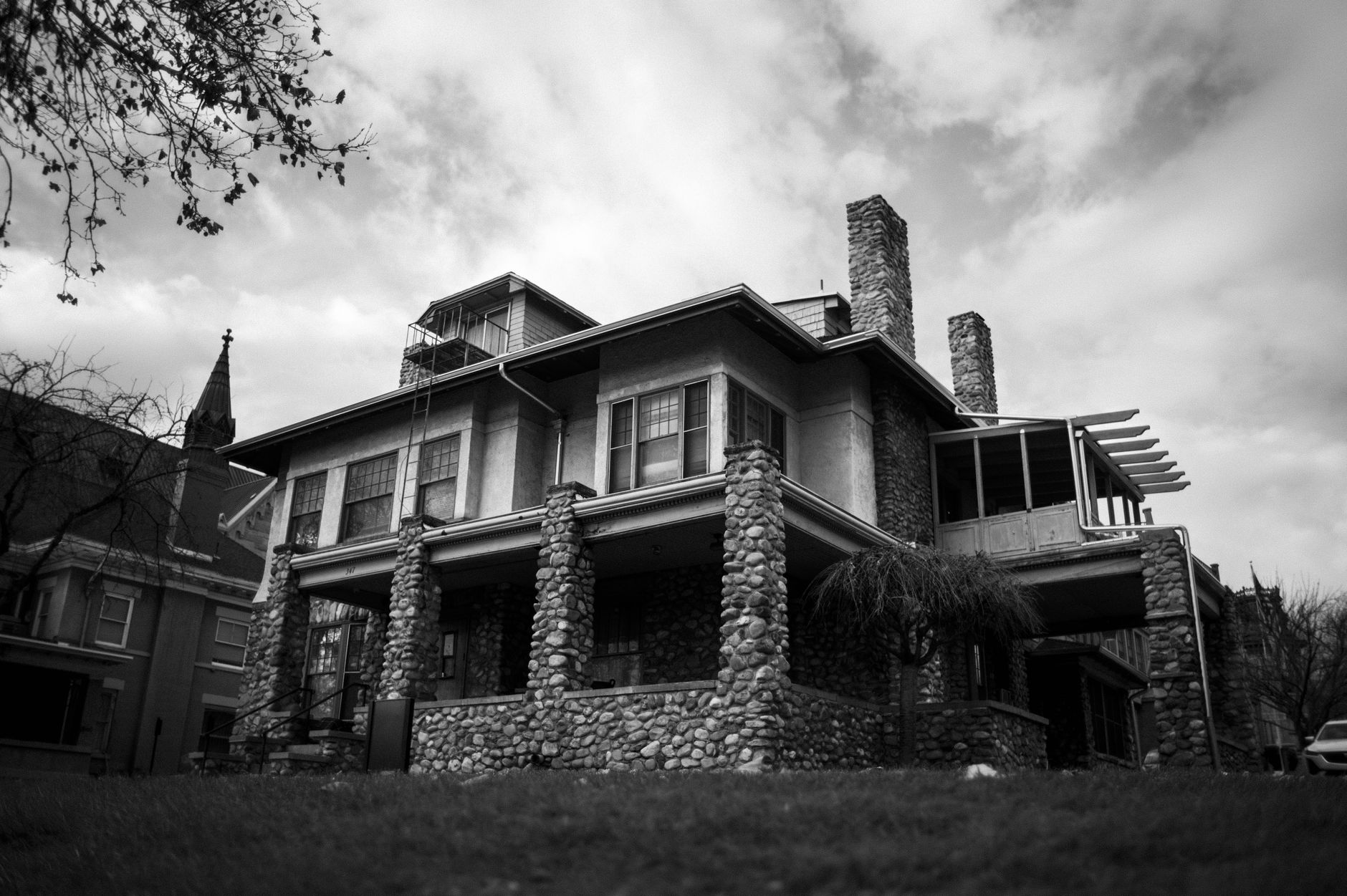
Chimney Rebuilds in Lakewood Above Shared Walkways and Roofs
Chimney Rebuilds for Several Units?
Give the address and how many units it covers. We call back from Lakewood with the order and the price per unit.
How It Runs Across a Property
When a stack leans, has shifted, or has lost too much mortar to repoint, the upper part comes down and goes back up. On a building that means planning which units lose their fireplace while the work runs and who pays for which part. We set out the scope, the permit, the liner for each flue and the new crown and cap, then file before and after photos for every unit the stack serves.
How We Decide a Chimney Needs Rebuilding
Most chimney problems are fixed with joints, a crown or a few bricks. A rebuild comes in when the brick itself can no longer hold together: the stack above the roof rocks when pushed, it has a crack running right through, it has pulled away from the wall, or mortar has turned to powder so deep that repointing would just be filling a hole. Southern California adds its own cause. The 1987 and 1994 quakes left many brick chimneys in this part of Los Angeles County with cracks at the roofline that were patched over rather than fixed, and those patches are now failing. On a building, a rebuild also matters because of what sits below. A stack that drops bricks onto a walkway, a carport roof or a neighbour's unit is a hazard to people who never chose to live under it, so we rank it ahead of almost anything else on the record.
Very few rebuilds take the whole chimney down. In most cases the damage is in the part above the roof, which takes the weather and the shaking, while the masonry under the roofline holds up fine. Our crew removes the stack one row of brick at a time, testing each row, until we reach brick and mortar that are firm, and rebuild from there with new brick matched as closely as we can to the old, a new crown and a cap. Flashing goes back in as part of the job. Where the flue tiles were broken in the section we removed, new tile or a liner goes in with it. The written scope names the course we plan to stop at and carries a second figure for going lower should the brick there prove soft, so the owner is not surprised halfway through the job.
Running a Rebuild on an Occupied Building
A rebuild is the largest chimney job we do, and on an occupied building it needs planning with the owner or the board. The area under the chimney is fenced off before the first brick comes down, and debris is lowered in buckets or a chute, never dropped. Tenants in the units served by the chimney are told when the fireplace cannot be used, and units next to the work are told when the noise will be loudest. If the chimney serves a furnace or water heater as well as a fireplace, we plan around that appliance so nobody is left without hot water longer than the work requires. On condo buildings, the board usually needs to approve work on the exterior, and we provide the written scope it needs to do that, with the chimney, the units affected and the work described in plain terms.
Some owners use a rebuild as the moment to decide whether they want the chimney at all. If a fireplace has not been used in years and the building has moved to gas or electric heat, a stack can be taken down below the roofline and the roof closed over it, which removes the hazard and the upkeep. Others want to keep the fireplace and have the stack braced against the next strong shake, and we can talk through the options for that on the seismic retrofit page. Either way, the decision belongs to the owner, and the quote sets out each option side by side. Rebuilds have no list price on this site, because the height, the number of flues and the access on a three-storey building in Long Beach differ so much from a single-storey duplex in Lakewood or Compton.
How Dalby Chimney Services Keeps the Record
Per-Unit Pricing
Each fireplace or stack on its own line
Unit Sheets
Photos and a status for every fireplace
Shared Work Tagged
Stack and roof items marked for the board
Scope Before Work
Nothing starts until the written scope is agreed
Cities with a chimney rebuilds page
Pick a city for the building types we meet there and the ZIP codes on that part of the route.
CA
Chimney Rebuilds in Lakewood
A tract model here may or may not have come with a fireplace; 89% of these houses predate 1980. For an owner holding three or four of them, each hearth gets its own numbered line in our record.
Open city pageCA
Chimney Rebuilds in Norwalk
Farm and dairy parcels gave way to houses mostly in the 1950s; the unit count before 1980 runs to 83%. Landlords with several of them can book one trip, and every brick flue comes back as a separate entry.
Open city pageCA
Chimney Rebuilds in Long Beach
Owners hold just 41% of homes, and only 40% stand detached, so a single building can hide many flues. Managers get one visit for the whole roster, with a numbered sheet per unit.
Open city pageCA
Chimney Rebuilds in Compton
Thirty percent of this housing predates 1950, so hand-laid brick turns up often, prone to tired mortar and quake cracks. Several units on one parcel? Each flue is inspected and filed under its own address line.
Open city pageOther Work We Book Per Unit
Chimney Sweep
Flue brushing for every unit on the property in one booking, with a buildup note filed under each address.
Open →Chimney Inspection
Roster-wide checks, Level 1 or Level 2, for every chimney on the property, each written up against its own unit number.
Open →Chimney Repair
Repairs scheduled across the building in one plan, with each fix tied to the unit and flue it belongs to.
Open →Fireplace Inspection
A room-side check of each fireplace in the building, from firebox to hearth, logged as its own entry.
Open →Fireplace Repair
Firebox, panel, hearth and door faults fixed unit by unit, with the parts used written into each record.
Open →Chimney Level 2 Inspection
The video level of inspection, run flue by flue when units sell, change hands or come through a quake or fire.
Open →Chimney Cap Installation
Caps measured and fitted per flue on the roof, so one climb covers every opening in the building.
Open →Chimney Flashing Repair
Roof seals around shared chimneys rebuilt where water reaches a unit, with the leak tied back to its stack.
Open →Chimney Masonry Repair
Brick and mortar work on shared stacks, scheduled once and logged for each unit that uses the chimney.
Open →Fireplace Cleaning
Room-side cleaning of fireboxes, grates and glass in every unit, booked as one round across the building.
Open →Gas Fireplace Cleaning
Yearly service of gas units across a building, each cleaned, lit and checked, with a log line per unit.
Open →Gas Fireplace Repair
Gas fireplace faults found and fixed unit by unit, with a parts record kept so repeat failures show up.
Open →Fireplace Remodel
Fireplace updates planned across matching units or one large room, with clearances measured before design.
Open →Fireplace Inserts
Inserts fitted into existing fireplaces across a building, one model where possible, so later service stays simple.
Open →Pellet Stove Repair
Pellet stoves serviced and repaired in homes and units that rely on them, with each stove's history logged.
Open →Wood Stove Repair
Wood stove seals, glass, firebrick and baffles renewed, with each stove's clearances checked and recorded.
Open →Gas Logs
Gas log sets fitted to wood fireplaces in houses and units, matched across rooms where the owner wants them alike.
Open →Chimney Seismic Retrofit
Quake bracing or partial rebuilds for brick stacks on older buildings, planned and priced stack by stack.
Open →Chimney Crown Repair
Crowns on shared stacks sealed or recast, so water stops reaching every flue that sits below them.
Open →Dryer Vent Cleaning
Dryer ducts cleared in each unit or laundry room, with the run length and airflow written down per machine.
Open →Chimney Liner Installation
Stainless liners run in flues that failed inspection, sized per appliance and recorded under each unit.
Open →Chimney Leak Repair
Water at a chimney traced to its entry point and stopped, with every affected unit named in the report.
Open →Chimney Waterproofing
Breathable water repellent applied to sound brick on shared stacks, once the crown and joints are in order.
Open →Chimney Damper Repair
Throat and top dampers repaired or replaced unit by unit, so each fireplace opens and closes as it should.
Open →Chimney Chase Cover
Metal tops on framed chimney chases replaced to size, so water stops reaching the units below.
Open →